
Description
Application
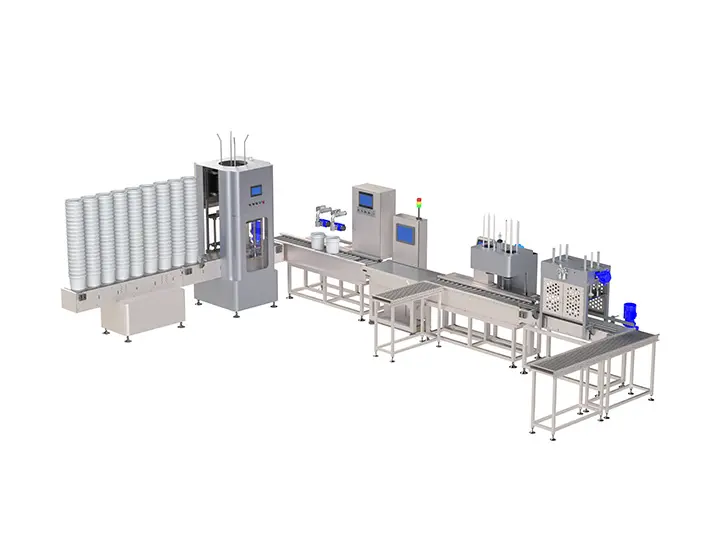
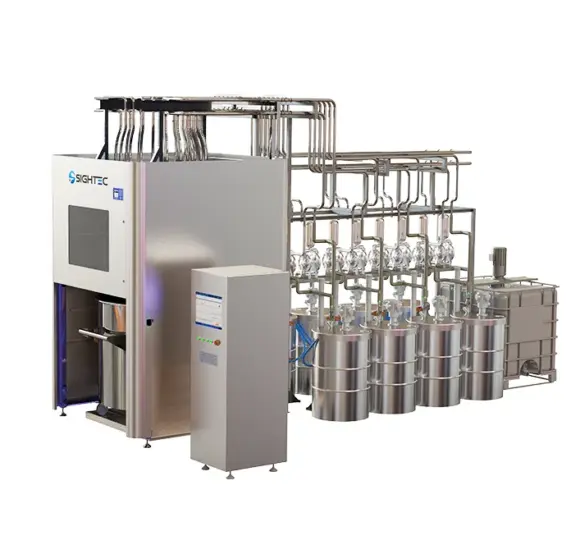
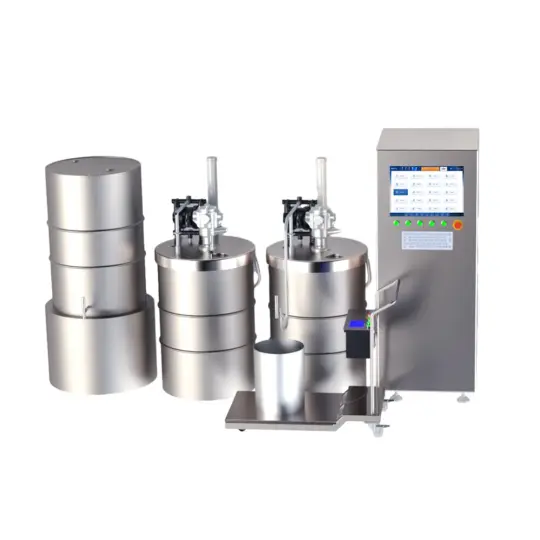
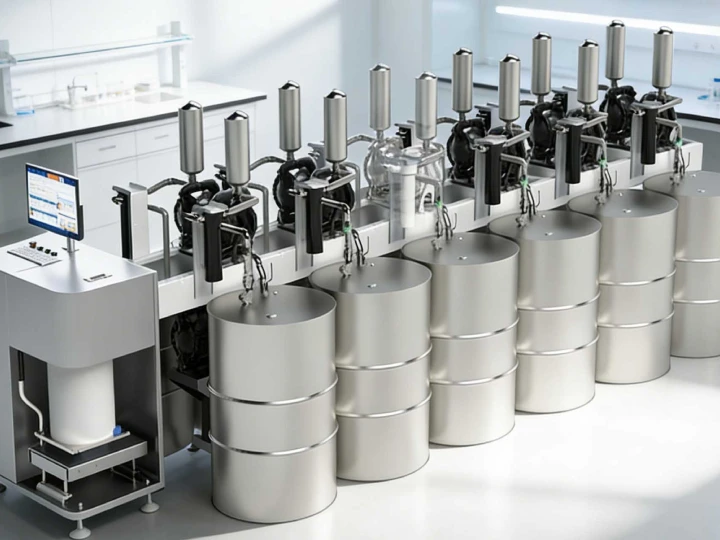
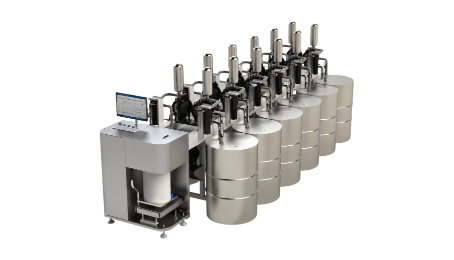
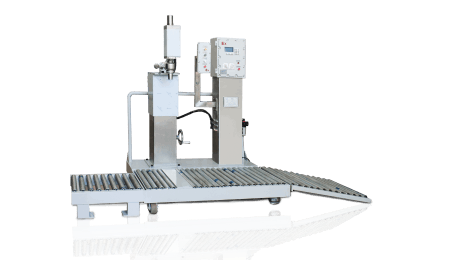
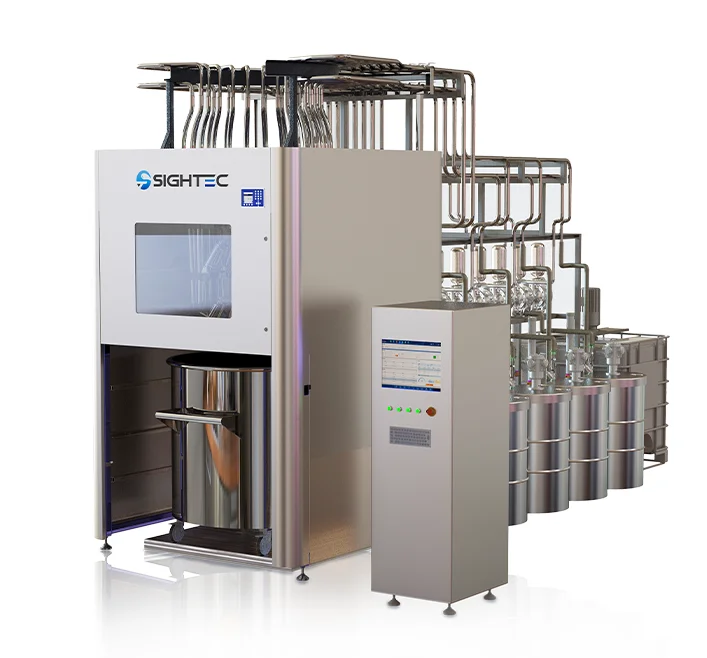
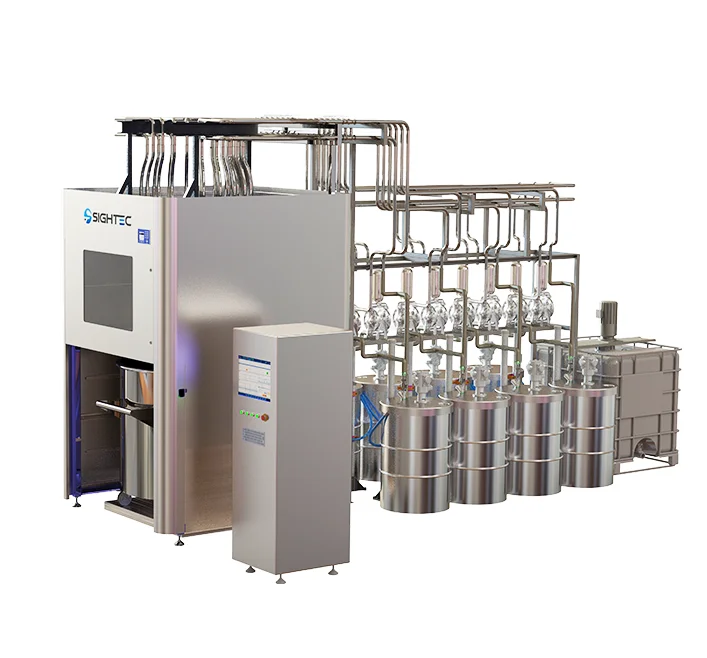
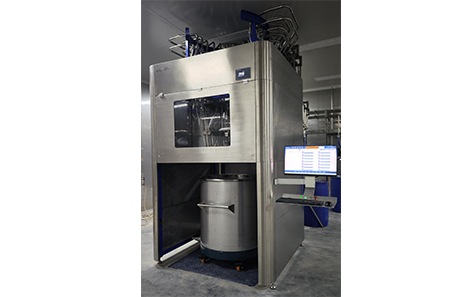
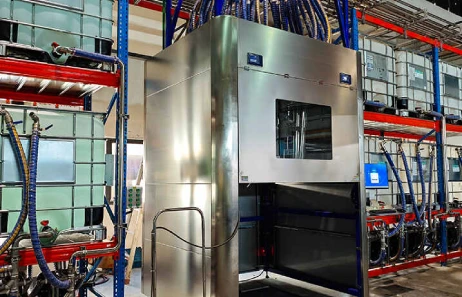
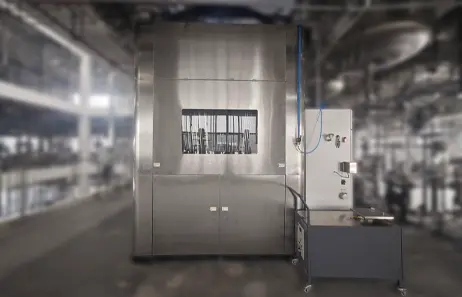
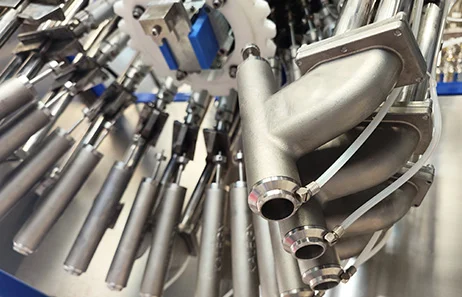
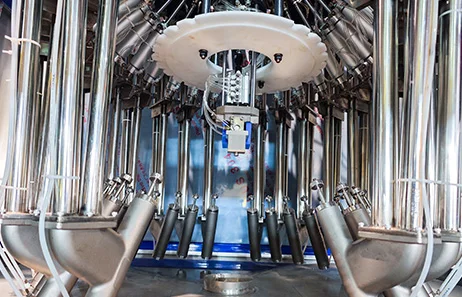
The auto dispenser machine adopts a swing-arm structure and is commonly used in dispensing production. All valves are positioned at the same dispensing point, and it is compatible with receiving containers ranging from 1L to 1500L. Multiple scale platforms can be configured to accommodate containers of varying capacities, with the capability to load up to 60 raw materials. The machine is widely applied in industrial paints, automotive refinish paints, and other coating ingredient dispensing and tinting production. The liquid dispensing system can interface with the factory’s ERP/MES systems to enable production data exchange, scan to obtain production tasks, and automatically collect and feed back production data, facilitating later batch traceability and material statistics.
Highlights
High efficiency and precision with accuracy of up to 0.1g;
Advanced automation to improve production efficiency and lower VOC emissions;
Producing and order management, linked with factory ERP/MES systems
Product Parameter
| Working Environment | EX/Non-EX |
| Application | Water/Solvent Based Products |
| Number of Circuits | Up to 60 |
| Type of Material Tank | Pails / Drums / IBCS |
| Minimum Container Opening | 100mm |
| Typical Batch Size | <2000L |
| Application Product Viscosity | <6000 CPS (Higher Viscosity Configurations Available) |
| Performance | 3-5min per 20L |
| Valve Type | Three-stage Multi Flow valve |
| Accuracy | Weighing capacity of 30kg with±1g accuracy,or 1000kg with±50g accuracy(Higher Precision Options Available) |
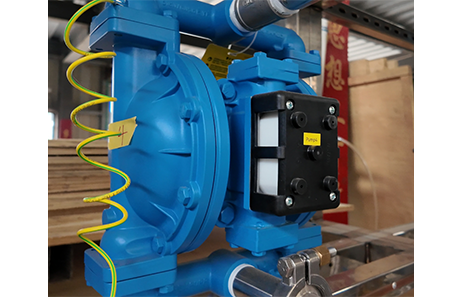
| Pump Size | 0.5″/1″/1.5″/2″ |
| Valve Cleaner | Automatic |
| Scale | 1-3000 kg(Multiple Ranges Optional) |
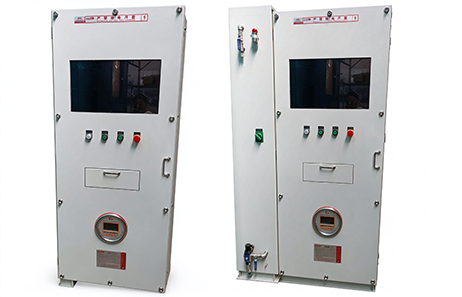
| Cabinet | Standard Control Cabinet/Pressurized Explosion-Proof Control Cabinet |
System Components
The DM-Series Automatic Dosing Unit system consists of:
Flexible swing-arm design for efficient dispensing into different container sizes while saving production space.
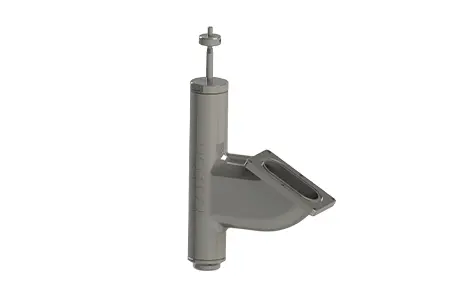
Three-stage dispensing valves support fast filling and micro-dosing for accurate and stable color formulation.
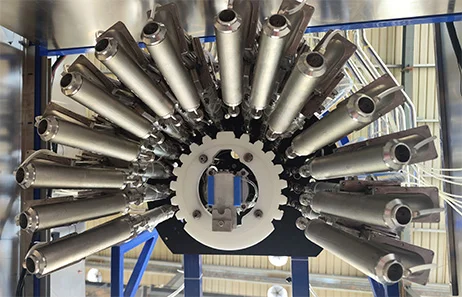
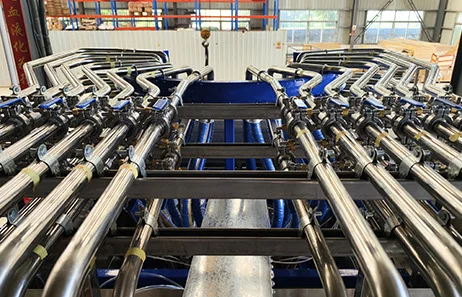
Supports up to 60 dispensing channels for handling various liquid materials and viscosities.
Real-time weighing feedback ensures precise dispensing accuracy and batch consistency.
Reduces material residue, cross-contamination, and increases maintenance time.
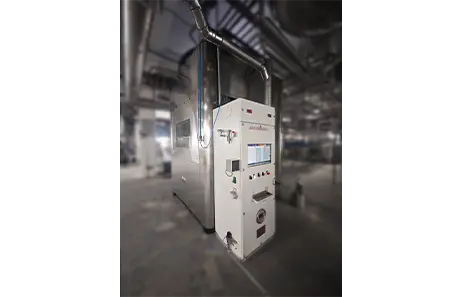
Centralized system control for automated dispensing, safety monitoring, and stable operation.
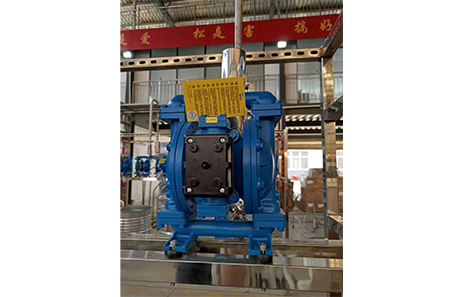
Detail Photos & Videos
FAQ
What industries is the DM-Series Automatic Dosing Unit suitable for?
The SIGHTEC DM-Series automatic dosing unit is widely used in paint, ink, coatings, leather, textile, cosmetics, and chemical industries. It is designed for high-precision liquid dispensing and automated color matching applications that require stable batch consistency and efficient production workflows.
What dispensing accuracy can the DM-Series Automatic Dosing Unit achieve?
The DM-Series automatic dosing unit features a high-precision weighing and multi-stage valve control system. The dispensing accuracy can reach ±1g for 30kg batches and ±50g for 1000kg batches, helping manufacturers reduce color deviation, material waste, and manual errors during production.
Can the DM-Series Automatic Dosing Unit handle both water-based and solvent-based materials?
Yes. The DM-Series automatic dosing unit is compatible with water-based, solvent-based, UV, and specialty chemical materials. Explosion-proof configurations are also available for hazardous production environments involving flammable liquids and VOC-sensitive applications.
Does the DM-Series Automatic Dosing Unit support ERP and formula management integration?
Yes. The DM-Series automatic dosing unit can integrate with ERP and intelligent formula management software to enable automatic batch calculation, production traceability, inventory synchronization, residual material management, and real-time production monitoring. This helps improve operational efficiency and supports smart factory automation.
How do you clean the valve orifice on the DM-Series Automatic Dosing Unit?
There is a white PTFE flexible hose next to the discharge valve for cleaning. Cleaning can initially be carried out using a solvent; however, this will leave water droplets, which will subsequently be blown away by the gas flow (Generally speaking, explosion-proof equipment requires flushing with a solvent, whilst non-explosion-proof machines can simply be flushed with water). Once discharging is complete, the cleaning procedure will commence automatically without the need for manual intervention.